
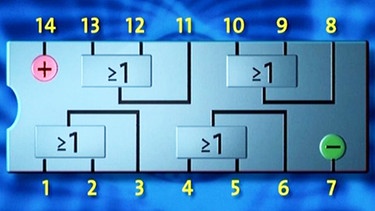
Introduction to Digital Technology
This course covers the fundamentals of computer science. The topics include:
- Information and coding, especially binary coding
- Computer architecture: structure of computers
- Boolean logic, sequential circuits and combinational circuits
- Programming languages
- Additional topics: Software development, operating systems and computer networks
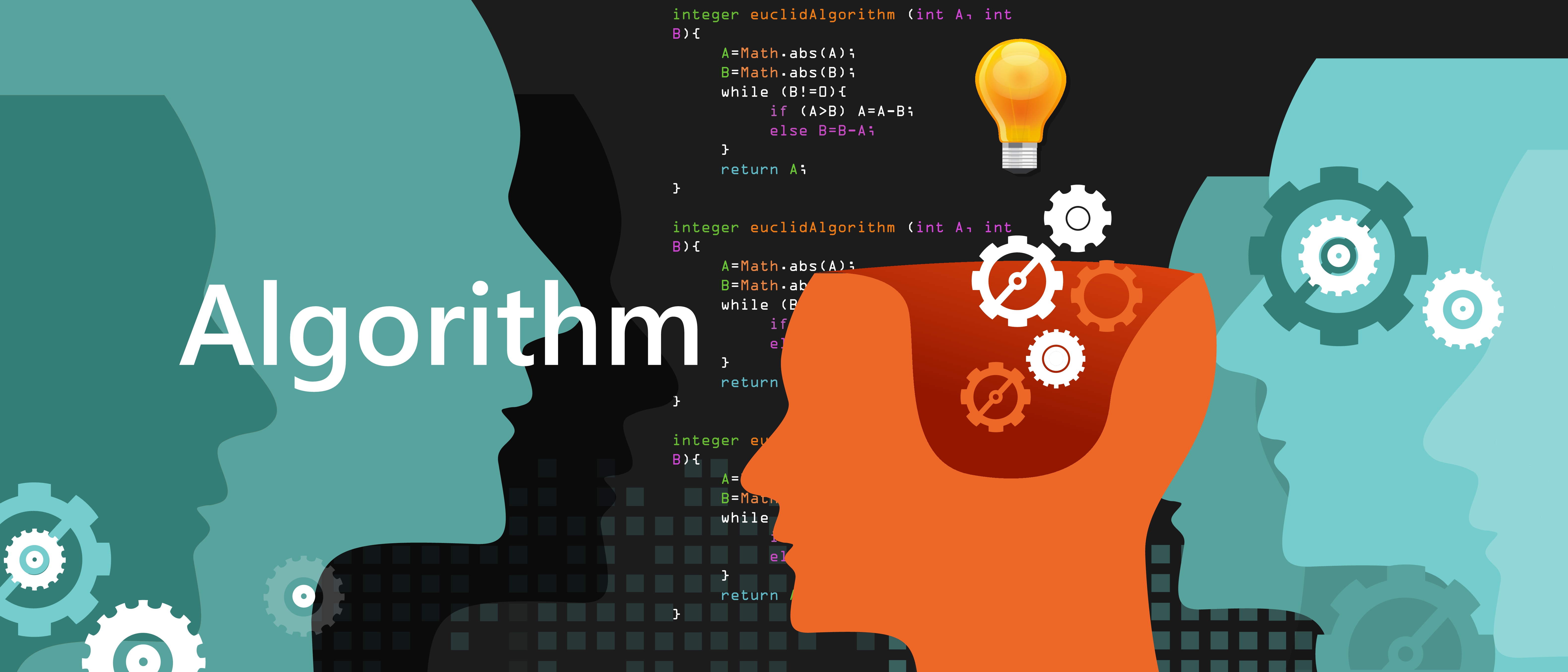
Concise Introduction to some aspects of classical physics, mostly mechanics. Topics include kinematics in 1D and 3D, Newton's laws, momentum, work and energy, rotations and angular momentum, oscillations and resonance, waves, and wave superpositions (standing waves, interference, beats, complex waveforms, Fourier analysis/synthesis, spectra)
"Unser Generalleutnant L.Euler gibt durch unseren Mund folgende Erklärung ab. Er bekennt offen: ...dass er künftig nicht mehr sechzig Seiten lang rechnen wird für ein Resultat, das man mit wenig Überlegung auf zehn Zeilen ableiten kann. Und wenn er wieder seine Ärmel aufkrempelt, um drei Tage und drei Nächte durchzurechnen, dass er dann eine Viertelstunde zum Nachdenken verwenden will, welche Prinzipien am besten zur Anwendung kommen"
Voltaire (Auszug aus Diatribe du docteur Akakia)
Nachdem im ersten Semester die Grundlagen der Programmierung und von Programmiersprachen gelernt wurden, geht es nun in diesem Kurs einerseits um die Strukturen der durch Programmtexte dargestellten Algorithmen. Andererseits aber, und eng mit erstem verbunden, um die Aspekte der Datenstrukturierung. Beides dient dazu Methoden der Programmierung zu erlernen, um somit die Befähigung zu erlangen komplexe Programme möglichst fehlerfrei und effizient zu erstellen. Dazu lernen wir bestehende Datenstrukturen und Algorithmen kennen, und werden diese analysieren und auch selbst implementieren.
Digital Practical Course
Course "Databases" by Prof. Dr. Thorsten Schmidt
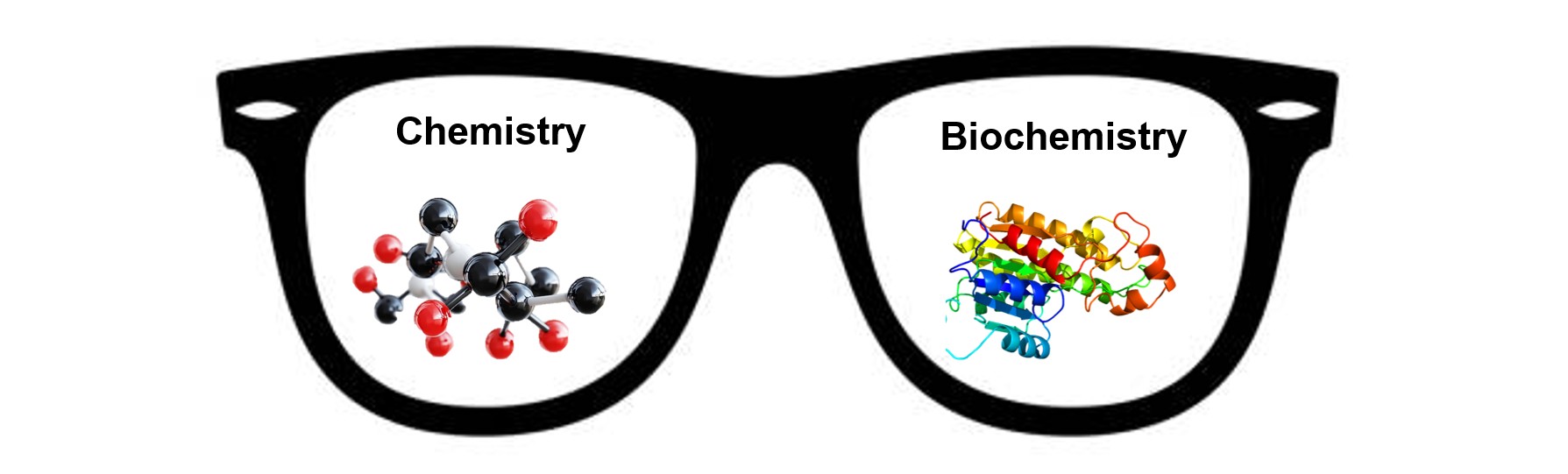
This module provides a comprehensive introduction to the world of chemistry and covers a wide range of topics. It begins with an introduction to chemistry, the structure of atoms and the different types of chemical bonds. It also covers the structure of the periodic table of elements as well as ionic, atomic, metal and coor
dination bonds.Another important point is stoichiometry, which deals with quantities of substances, concentrations and the calculation of chemical reactions. This also includes calculating mixtures. One focus is on the chemistry of aqueous solutions. The components of water, water hardness, the law of mass action, the protolysis of water and the pH value as well as acid-base reactions, the hydrolysis of salts, buffer systems and the solubility of salts are dealt with here. Redox reactions are another central topic. It explains what oxidation and reduction are, how to determine oxidation numbers and how to set up redox equations. Finally, organic chemistry is covered. Basic substance classes such as alkanes, alkenes, alkynes, alcohols, carboxylic acids, ketones and aldehydes, amines and aromatic compounds are presented here. Important natural substances such as amino acids and proteins, sugars and nucleic acids are also discussed. This comprehensive module thus forms a solid basis for a deep understanding of chemistry and biochemistry.